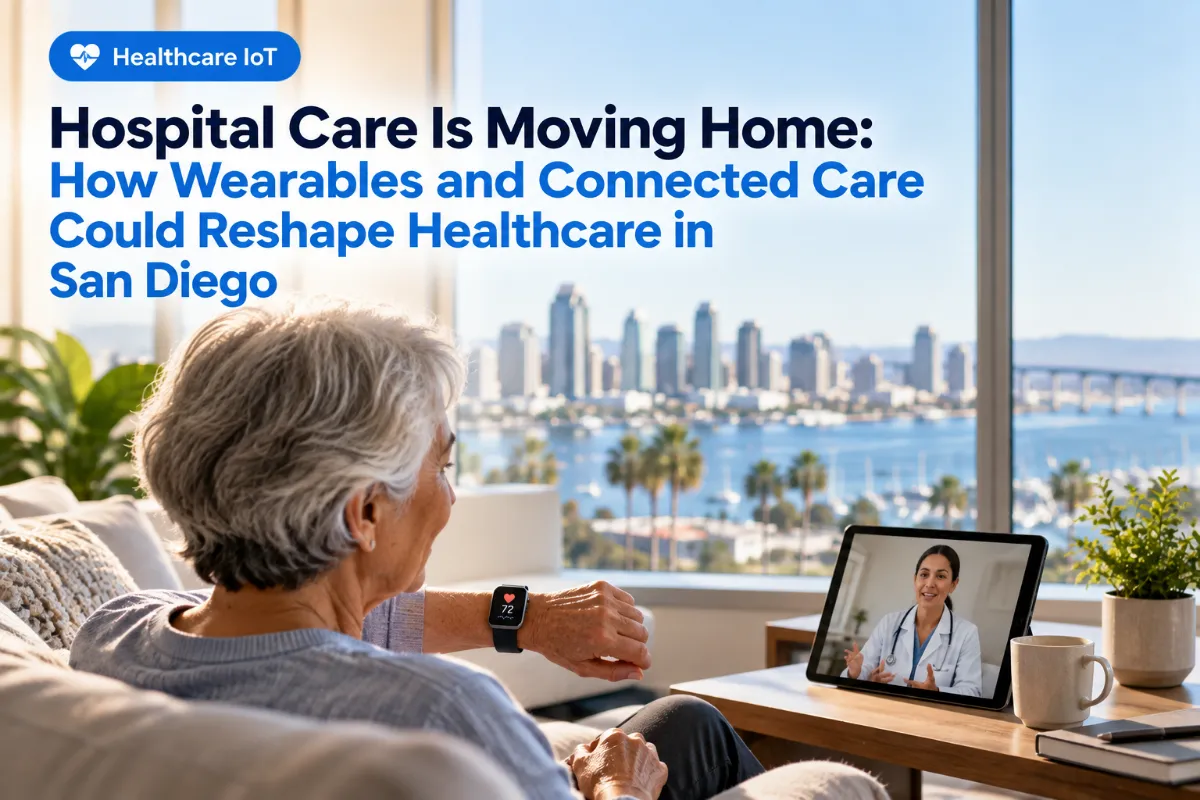
San Diego's hospital systems are operating in a tighter capacity environment than most people outside healthcare administration realize. An aging regional population, a persistent nursing shortage, and steady growth in the county's overall population have combined to put real pressure on inpatient bed availability across Scripps Health, Sharp HealthCare, UC San Diego Health, and the county's smaller community hospital networks. The response gaining the most traction in 2026 isn't a new wing or a bigger emergency department. It's a shift toward treating patients at home, using IoT-connected devices to deliver clinical-grade monitoring outside hospital walls.
This matters for San Diego specifically because the region combines two things that make hospital-at-home programs unusually viable: a strong local biotech and medical device ecosystem that includes companies headquartered here building the very sensors these programs depend on, and a geographically spread population across coastal, inland, and North County communities where reducing unnecessary hospital visits has real logistical value.
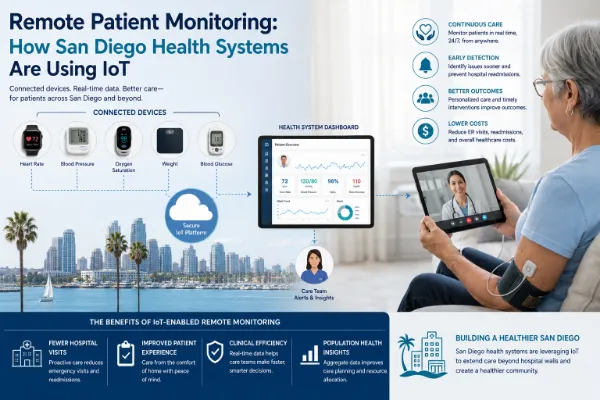
Remote patient monitoring, often shortened to RPM, uses connected devices such as wearable ECG patches, continuous glucose monitors, pulse oximeters, and blood pressure cuffs to transmit clinical data directly to a care team without requiring the patient to be physically present in a facility. What's changed in the past two years is the reliability and clinical validation of these devices, moving them from consumer wellness gadgets into instruments trusted for genuine clinical decision-making.
San Diego's medtech cluster gives local health systems an advantage here that most regions don't have. Companies based in the region have spent years developing continuous monitoring devices, and San Diego's health systems have been early, willing partners for piloting connected care technology, in part because of the tight geographic and professional overlap between the county's hospitals and its device manufacturers.
A hospital-at-home program isn't simply sending a patient home with a blood pressure cuff. A properly structured program includes several connected components working together:
- Continuous vital sign monitoring through wearable sensors that transmit heart rate, oxygen saturation, respiratory rate, and temperature data at intervals far more frequent than a traditional hospital's nursing rounds.
- Medication adherence tracking using smart pill dispensers or connected packaging that alerts the care team if a scheduled dose is missed.
- Two-way telehealth integration, allowing a clinician to initiate a video visit the moment monitored data indicates a concerning trend, rather than waiting for a scheduled check-in.
- In-home diagnostic capability, including portable ultrasound or point-of-care lab testing devices that reduce the need for a patient to travel back to a facility for routine follow-up testing.
- An escalation protocol connecting the home monitoring data directly to a virtual command center staffed by nurses and physicians who can dispatch an in-person visit or ambulance transport if thresholds are crossed.
The clinical conditions best suited for this model, congestive heart failure, COPD, post-surgical recovery, and certain infectious disease treatments requiring IV antibiotics, tend to be ones where San Diego's aging population and chronic disease burden create consistent, ongoing demand.
The financial argument for hospital-at-home is straightforward once framed around bed capacity rather than pure cost savings. Every patient successfully managed at home through RPM is a bed available for a higher-acuity case that genuinely requires inpatient care. For a health system operating near capacity during flu season or a regional surge event, this flexibility has value that goes beyond the direct cost comparison between inpatient and at-home care.
Beyond capacity, the documented clinical outcomes are becoming difficult to ignore. Programs combining wearables, structured monitoring, and predictive algorithms have shown meaningful reductions in 30-day hospital readmissions for conditions like heart failure, a metric that matters directly to San Diego hospitals given how heavily readmission rates factor into Medicare reimbursement penalties. Reduced readmissions, avoided emergency department visits, and shorter average lengths of stay all show up as measurable financial benefits, not just clinical ones.
There's also a patient experience dimension that shouldn't be understated. Recovering at home, particularly for older patients managing chronic conditions, is consistently associated with better psychological outcomes and lower rates of hospital-acquired complications such as infections and delirium, both of which carry their own cost and liability implications for a health system.
Organizations that have successfully scaled hospital-at-home programs tend to follow a consistent implementation pattern.
- Start with a narrow, well-defined patient population. Most successful programs begin with a single condition, congestive heart failure is the most common starting point nationally, rather than trying to cover every eligible diagnosis at launch.
- Build the virtual command center before scaling patient volume. A staffed, 24-hour monitoring hub capable of responding to alerts is the operational backbone of the program, and understaffing it undermines clinical safety and staff confidence simultaneously.
- Integrate monitoring data directly into the existing electronic health record rather than running RPM data in a separate system clinicians have to check independently, which is one of the most common reasons pilot programs stall.
- Establish clear escalation thresholds with clinical staff input before launch, so alert fatigue doesn't undermine trust in the system once volume increases.
- Expand condition coverage gradually, adding COPD, post-surgical recovery, and other candidate conditions only after the initial program has demonstrated consistent outcomes.
Reimbursement uncertainty. While Medicare has expanded coverage pathways for hospital-at-home care in recent years, the long-term reimbursement structure remains a moving target, and health systems building programs need to plan financially for potential policy shifts rather than assuming current reimbursement levels are permanent.
Digital divide and equity concerns. Not every patient has reliable home internet connectivity or the technical comfort to manage connected devices, and San Diego's geographic and economic diversity means this gap shows up differently across coastal, urban, and rural East County populations. Programs that don't account for this risk excluding patients who could benefit most.
Device security and HIPAA compliance. Every connected medical device transmitting patient data outside a hospital's controlled network introduces a new potential vulnerability point. Health systems need rigorous vetting of device manufacturers' security practices, not just their clinical accuracy claims.
Clinician workflow disruption. Physicians and nurses accustomed to inpatient rounding structures need meaningful training and workflow redesign to operate effectively in a remote monitoring model, and underinvesting in this change management is a common reason programs underperform their pilot projections.
The next stage for hospital-at-home in San Diego involves deeper integration between remote monitoring and predictive analytics. Rather than simply flagging when a vital sign crosses a fixed threshold, emerging platforms use machine learning models trained on heart rate variability, activity patterns, and historical data to flag deterioration risk days before a traditional threshold-based alert would trigger, giving care teams a genuine window for early intervention rather than a reactive response.
Expect continued expansion of the conditions eligible for hospital-at-home treatment as clinical evidence accumulates, along with growing interoperability between hospital systems and the region's medical device manufacturers, several of which are actively developing next-generation sensors specifically designed for continuous, unobtrusive home monitoring. For a health system operating in a capacity-constrained market like San Diego, the direction of travel is clear: the hospital bed of the future increasingly isn't a bed inside the hospital at all.
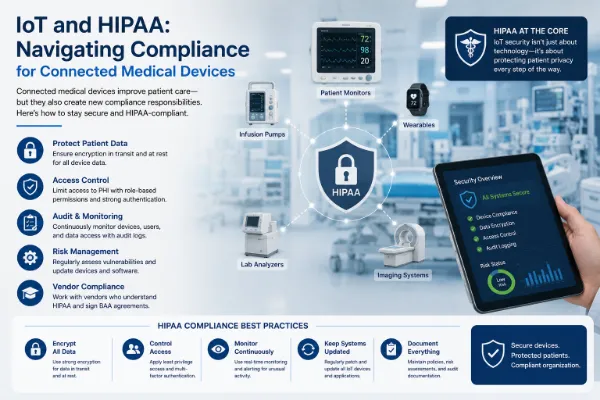
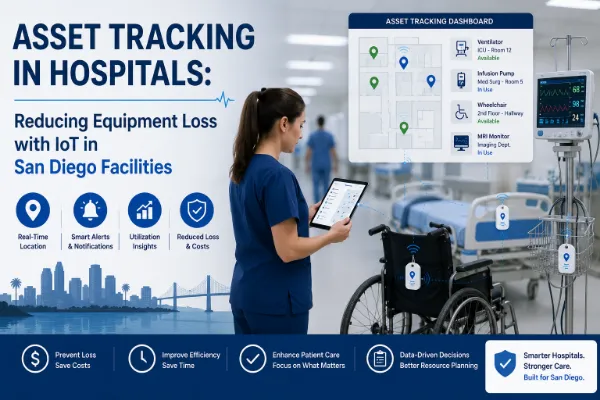
For related coverage, see our guide to remote patient monitoring adoption across San Diego health systems, our overview of hospital asset tracking and equipment loss prevention, and our breakdown of HIPAA compliance for connected medical devices. San Diego is also home to device manufacturers active in this space, including Dexcom and ResMed. Explore more coverage in our Healthcare IoT category or the San Diego healthcare IoT hub.
Frequently asked questions
For appropriately selected patients and conditions, published outcomes data shows comparable or better safety profiles, with the added benefit of lower rates of hospital-acquired infections and complications like delirium. Programs rely on clear escalation protocols so that any concerning change in a patient's condition triggers rapid clinical response or transport back to a facility.
Congestive heart failure, COPD exacerbations, certain infections requiring IV antibiotics, and post-surgical recovery are among the most common conditions covered by hospital-at-home programs nationally and locally. Eligibility ultimately depends on the specific health system's program design and a patient's individual clinical presentation.
Medicare has expanded coverage pathways for hospital-at-home programs in recent years, and many private insurers have followed with similar coverage, though specifics vary by plan and by health system. Patients should confirm coverage details directly with their care team and insurer before enrollment.
Related articles

 Healthcare IoT